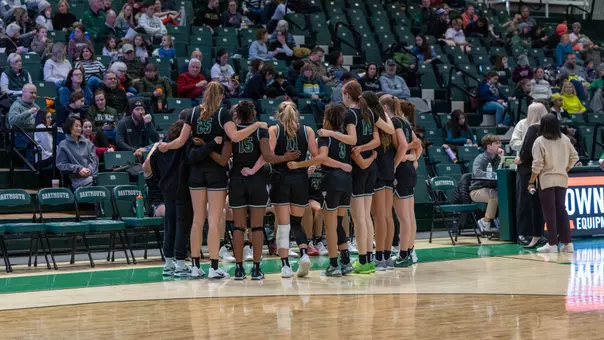
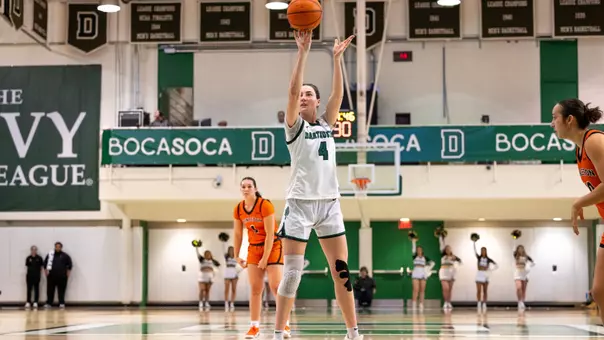
In the summer of 2020, Dartmouth head women's basketball coach
Adrienne Shibles went for a routine mammogram.
It came back clear.
But later in the summer, she detected a lump underneath her armpit.
"It was close enough to the lymph node that I decided to get it checked," she said. "My primary care doctor didn't think it was anything, but wanted to have it biopsied to make sure.
"I was shocked when it came back as breast cancer."
Fortunately for Shibles, she caught it early.
"It didn't show up in my mammogram, but it was stage one breast cancer," she said. "I was really fortunate to have very good doctors and healers, and a very experienced surgeon. After lots of consults with her and talking to a lot of survivors, the recommendation was a lumpectomy, but I decided to have a bilateral mastectomy. With the risk of recurrence, I didn't want to be constantly concerned about the cancer coming back. I wanted to give myself the best chance for the remainder of my life being cancer free."
Compared to many with a breast cancer diagnosis, Shibles' road to recovery was pretty straight forward. But it was not easy by any means. Also, the diagnosis happened at the onset of the COVID-19 pandemic, only making the situation more complicated.

"Shock," said Shibles, when asked her first reaction to the diagnosis. "As a coach, your life is so crazy, but it was the first time in a while that I had time to really devote to my self care. I was in the best shape of my life and eating really well. There hasn't been any breast cancer in my family.
"I was just shocked about it."
Shibles' background in athletics, and as a coach, led to where her mind went next.
"Alright, I need a game plan," she said. "Although the word cancer is very scary, it was more like okay, I need action. I need to do some research.
"Being someone who's been a student-athlete myself and coach, I believe resilience is something that athletics teaches."
Resilience was certainly needed for Shibles as she went in for surgery.
"My husband couldn't even be there with me for the surgery [because of hospital pandemic-related protocols]," she said. "It was a pretty lonely process. I had everything done in Maine. There's this great Dempsey Center for support right next to the hospital, but a lot of those resources were not able to connect with the cancer patients during COVID.
"I don't think we were able to have the in-person care that a lot of cancer patients usually get," Shibles continued. "It was all virtual, which is still great, but not having my husband there, and not being able to have visitors in the hospital, I don't know how people did it who lost loved ones during that time."
Shibles opted for the mastectomy for a number of reasons.
"I went really aggressive with the surgery because if I did the surgery, it was very, very unlikely that I would need chemo and there was a possibility I wouldn't need radiation," she said. "If I did the lumpectomy, I would have definitely needed a lot of radiation. I was blessed that after the surgery, all the pathology came back that I did not need those treatments."
As a breast cancer survivor, Shibles knows what worked for her in regards to her decisions and approach.
But as she shared, there's no single approach that works for everyone.
"Everyone is different and responds to a cancer journey differently, so I wouldn't presume to say this is the only way," she said.

Shibles shared her story publicly on social media in the moment, and wants to share it today during Breast Cancer Awareness Month, because it could be the difference for someone.
"I put it out there on social media – this is what I'm going through – in order to really make sure that I had the support I needed from my friends and family," she said. "I went out of my way to connect with every woman who came along. I connected with every human being, every name that crossed my path and I gained great wisdom from all of those women."
Shibles has already been a difference maker for some, including some of her biggest supporters who had been acquaintances prior to diagnosis.
"They have become my sisters through all of this, one in particular," she said. "Because I put my journey on social media and one of these women, because of COVID, her mammogram had been pushed back. She called her doctor and demanded to get in.
"It turns out she had breast cancer," Shibles continued. "She said if I hadn't put that on social media, she didn't know if she would have pushed and pressed."
Shibles' impact has come in multiple ways. She wants to use her journey to help educate and support others. That trait of helping others is in Shibles' DNA (that's why she got into coaching).
"I would like to emphasize that everyone really needs to get their regular mammograms and follow up," said Shibles. "I had no history of breast cancer in my family, so I think I was a little bit complacent about it. I had been inconsistent with the self-examinations, but fortunately, I think because I was more tuned into self-care over COVID, I did that and I found that lump."
Whether the cancer is picked up from the mammogram or self-examination, what follows can be an emotional time.
Shibles' recommendation is to take care of yourself.

"It's important to be clear with your loved ones about what you need in order to be supported," she said. "Some people aren't going to want to have a social media presence about their cancer journey, but they're going to need other things."
Shibles took the time she needed.
"I took medical leave and spent the time I needed to focus on getting healthy and garnering the information I needed," she said.
Some of what she found was information. The other thing she found was people.
"There are a tribe of people out there who have been through breast cancer journeys," said Shibles.
"Their support was indispensable."