Completed Event: Men's Soccer at Columbia on October 11, 2025 , Win , 2, to, 1
Final

Men's Soccer
at Columbia
2
1

Final
Men's Soccer
at Columbia
2
1
Final

Men's Soccer
at Yale
1
0
Final

Men's Soccer
at UMass
0
2
Final

Men's Soccer
vs Penn
0
2
Final

Men's Soccer
at #5 Princeton
0
1
Final

Men's Soccer
vs Harvard
1
3
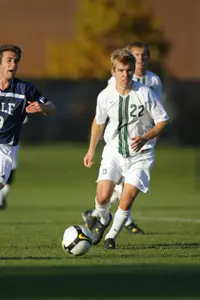
3/25/2009 12:00:00 AM | Men's Soccer
Through the biology department foreign study program to Costa Rica, I've had the opportunity to earn biology major credit studying tropical forest ecology this winter. I can't think of a better way to earn three major course credits than watching sea turtles dig their nests on the beach at Santa Rosa national park or wading through a clear river on the Osa peninsula to survey declining basilisk lizard populations. Dartmouth has provided me with many amazing experiences off the soccer field, this term included, and I want to share some of the academic, cultural, and unique aspects of my term abroad. Over the course of three months here I will have visited seven distinctive forest ecosystems and a coral reef, and designed up to ten research projects with my peers to study tropical forest and reef ecology.

I just finished a project at Corcovado national park designed to study the declining populations of basilisk lizards inhabiting the banks of rivers and steams in the area. As part of a long term Dartmouth study, three of my fellow classmates and I surveyed the basilisk population for three days. The population hadn't been surveyed since 2001 and we decided to gather some new data. We found continued decline which may be due to climate change and a tropics-wide phenomenon of reptile and amphibian decline. I like projects with a practical application - something connected to the big picture, with bigger implications for habitat or climate change. This program has given me the opportunity to practice designing and implementing projects about issues which may be important to conservation biology.
One of my goals in enrolling in this foreign study program was to gain some Spanish speaking experience and exposure to Central American culture. I completed my language requirement in Spanish shortly before leaving for Costa Rica, and several of our field sites have included lectures in Spanish. We also stay in San Jose sporadically and have had great opportunities to interact with locals and soak up the culture. At the Mercado Central in San Jose I had the opportunity to use my Spanish more in three hours than ever before in my life. At La Selva biological station we had the chance to play soccer with the Ticos (Costa Ricans) before dinner. The station patrolmen would put down their automatic rifles and play soccer for almost an hour in their fatigues and knee-high rubber boots. Despite the 85-degree weather and snake boots their skills were pretty impressive. Some of the most fun I've had on the trip so far has involved soccer with locals. It's a pretty universal language and it's great to be able to take that part of my Dartmouth experience around the world with me.

Besides biology research and bartering with locals in the Mercado Central, we've had some incredible experiences and encounters that can't be found on your typical foreign study program. Our week-long stay at Corcovado National Park on the remote Osa peninsula offered some quality time with ticks and endangered wildlife alike. The road in was not an easy one. After a seven hour hike through tropical rainforest, we emerged from the jungle to find a revamped farmhouse and a single sweltering airstrip ending at the Pacific Ocean. A light plane had to wait until midday to fly in our heavier gear to avoid skidding off the dewy grass runway and into the surrounding jungle. The following week was full of ticks, anteaters wandering across the airstrip, and searches for huge American crocodiles and all four species of new world monkeys. We emerged from the jungle a little skinnier and with hundreds of insect bites, but it was well worth it.

We're currently en route to the Cayman Islands for the marine biology portion of the program. We'll have the chance to design snorkeling and SCUBA research projects. Coral is dying out worldwide and some attribute its decline to rising global temperatures. Hopefully we'll gain some insight into the decline of the most diverse ecosystem on earth during our three weeks here. We'll have the chance to SCUBA dive at all hours of the day and night.
I'm beginning to think that returning to the normal routine of college with papers, midterms, and offseason training, will be pretty tough. It has been an amazing few months that really offered a change from the norm and the chance to learn outside the classroom. This term many of my teammates and I have been lucky to take advantage of Dartmouth's ability to offer student-athletes a unique opportunity to compete at the highest level and still partake in amazing study abroad programs.